
The Structured Credit Interview
-
New balance of power
Jerome Booth, head of research at Ashmore Investment Management, answers SCI's questions
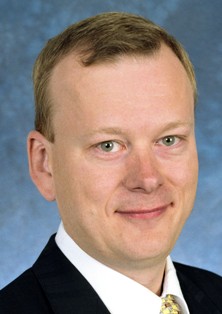
Jerome Booth Q: How and when did Ashmore Investment Management become involved in the structured credit market?
The Structured Credit Interview 13 May 2009
A: Ashmore Investment Management was formed out of Grindlays Bank (which was bought in 1984 by ANZ), whose London unit made markets in emerging market debt. We then began taking on simple corporate restructurings in Latin America, .......
-
Transforming risk and return
Jochen Felsenheimer, co-head of credit at Assenagon, answers SCI's questions
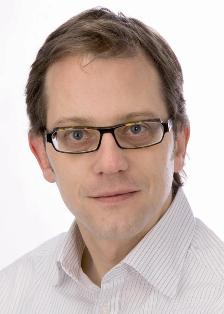
Jochen Felsenheimer Q: When did your company become involved in structured credit?
The Structured Credit Interview 21 January 2009
A: Assenagon just started to set up its credit business activities in January 2009 to provide institutional clients with asset and risk management solutions in the widespread area of credit, with the focus being clearly on credit derivatives and structured credit. The .......
-
Seeking sustainable returns
Indranil (Neil) Basu, managing partner of Pearl Diver Capital, answers SCI's questions
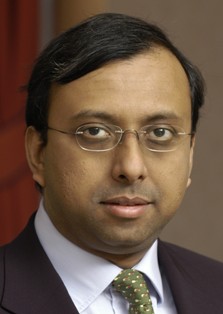
Neil Basu Q: When did your company become involved in structured credit?
The Structured Credit Interview 14 January 2009
A: Pearl Diver Capital came together in September 2008, to take advantage of the dislocated credit markets. The objective is to build a business around a thorough understanding of corporate credit and provide investors the opportunity to participate in corporate credit, .......
-
Moving down the complexity ladder
Ron D'Vari, ceo of NewOak Capital, answers SCI's questions
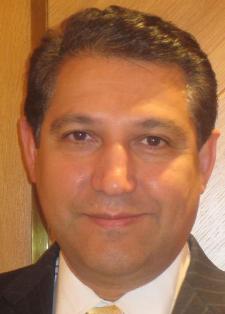
Ron D'Vari Q: When did NewOak Capital become involved in structured credit?
The Structured Credit Interview 17 December 2008
A: NewOak Capital was founded by James Frischling, previously head of structured credit products at Fortis Securities, and myself (I was previously head of structured finance at BlackRock) in 2008. The firm was created to provide independent and unbiased services in response .......
-
Light at the end of the tunnel?
David Matson, md at IKB Fund Management, answers SCI's questions
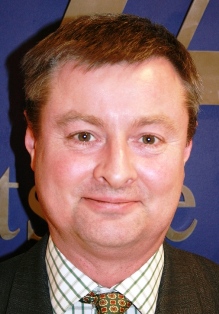
David Matson Q: When, how and why did your firm become involved in the structured credit markets?
The Structured Credit Interview 5 November 2008
A: IKB has been arranging and investing in leveraged loans to support private equity-sponsored leveraged buy-outs across Europe since the mid-1990s and structured its first Bacchus CLO to securitise these leveraged loans in 2006. Prior to .......
-
Poised for action
Jason Pratt, md at Peritus Asset Management, answers SCI's questions
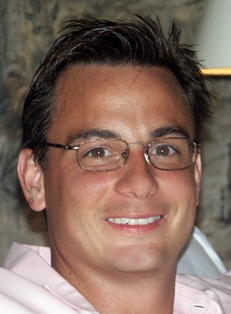
Jason Pratt Q: When, how and why did your firm become involved in the structured credit markets?
The Structured Credit Interview 1 October 2008
A: Peritus Asset Management got involved in the structured credit markets in the wake of Enron and Worldcom in 2002. We're predominantly a high yield bond shop, and we put together our first HY cash bond-backed .......
-
A differentiated approach
Paul Rivlin, joint ceo of Palatium Investment Management, answers SCI's questions
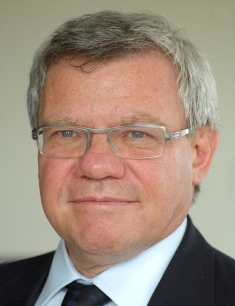
Paul Rivlin Q: When, how and why did your firm become involved in the structured credit markets?
The Structured Credit Interview 10 September 2008
A: Palatium Investment Management grew out of the real estate investment banking business that Neil Lawson-May, Palatium joint ceo, and I set up at Deutsche Bank in 1997, which was sold to Eurohypo in 2002. Over .......
-
Broadening horizons
Jack Lowe, ceo of BlueOrchard, answers SCI's questions
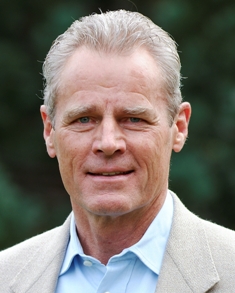
Jack Lowe Q: When, how and why did your firm become involved in the structured credit markets?
A: We decided to enter the structured credit market in 2004, when the company was relatively small. The idea was to use classic finance instruments to bring private funding to microfinance businesses.The first microfinance CLO, .......
The Structured Credit Interview 16 July 2008
-
Syndicated returns
Donald Uderitz, chairman and chief investment officer of Van...
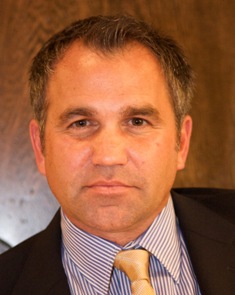
Donald Uderitz Q: When, how and why did your firm become involved in the structured credit markets?
The Structured Credit Interview 28 May 2008
A: Vanquish Capital Group is a boutique investment advisor that was established in 2006 and traded with its own money until January 2007, when we launched the US$58m VCG Special Opportunity Fund to focus on .......
-
Stressed emphasis
Bruno de Pampelonne, ceo of Tikehau Investment Management, answers SCI's questions
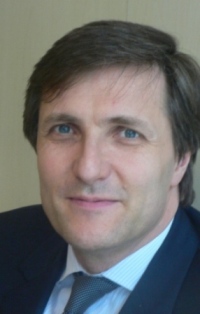
Bruno de Pampelonne Q: When, how and why did your firm become involved in the structured credit markets?
The Structured Credit Interview 12 March 2008
A: Tikehau Capital, our parent, was established three years ago by Antoine Flamarion, an ex-Merrill Lynch/Goldman Sachs professional, as an opportunistic investment company based in Paris. The 14-member Tikehau Investment Management (TIM) team has significant .......
-
Income-driven alpha
Mark Cernicky, enhanced credit portfolio manager at Aviva Ca...
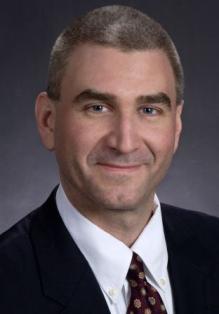
Mark Cernicky Q: When, how and why did your firm become involved in the structured credit markets?
The Structured Credit Interview 20 February 2008
A: Aviva Capital Management (ACM) began investing in single name, investment grade corporate credit default swaps (CDS) in 2001 and high yield, bespoke portfolios of CDS and CDS indices in 2004 for clients with targeted investment .......
-
Observing the cycles
Jamie Stuttard, head of structured credit at Schroders, answers SCI's questions
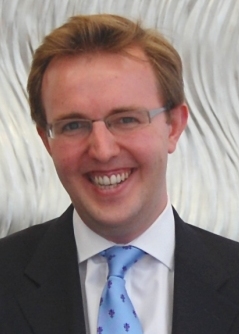
Jamie Stuttard Q: When, how and why did your firm become involved in the structured credit markets?
The Structured Credit Interview 23 January 2008
A: The current overall team has managed credit at Schroders since 1998. Our CIO joined in 1998, our head of global credit research in 2000 and our head of credit strategy in 2000; I'm in my .......
-
Value participation
Hans-Michael Schania, CDO management, Alex Tsymbal, US ABS a...
Q: When, how and why did your firm become involved in the structured credit markets?
The Structured Credit Interview 10 October 2007
A: Aurelius Capital is 100% owned by its employees and was founded in November 2006 after 18 months of negotiation with an institutional investor (a financing arm of an Austrian province that manages all the financing for the State of Lower Austria), which wanted to outsource .......
-
What goes around
Mark Gold, senior partner at Hillmark Capital, answers SCI's questions
Q: When, how and why did you and your firm become involved in the structured credit markets?
The Structured Credit Interview 19 September 2007
A: I first got involved in structured credit as an adjunct to the credit and loans business of the firm I was working for in 1990 – Chancellor Capital Management, formerly CitiCorp Investment Management – when we put together one of the first CLOs .......
-
Deriving value
Fabiana Gambarota, chief investment officer at P&G A...
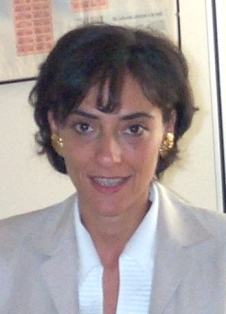
Fabiana Gambarota Q: When, how and why did you and your firm become involved in the structured credit markets?
The Structured Credit Interview 29 August 2007
A: P&G Alternative investments was incorporated in 2004 as a specialised player in asset-backed securities. However, the P&G team has been involved in the structured credit market as a unit since 2001 when we .......
-
All in the timing
Christiane Elsenbach, a managing partner at Mayflower Finance, answers SCI's questions
Q: When, how and why did you and your firm become involved in the structured credit markets?
A: Mayflower Finance was set up as a company in July 2006, but the founding partners have been involved in the structured credit markets since their inception. There are three founding, and now managing, partners – Dirk Röthig, Enno Balz and myself.Dirk Röthig .......
The Structured Credit Interview 22 August 2007
-
Manager-squared
James Smigiel, head of fixed income, Gregory Soeder, portfol...
Q: When, how and why did you and your firm become involved in the structured credit markets?
The Structured Credit Interview 11 July 2007
A: SEI has participated in the structured credit markets for the better part of a decade with our involvement best characterised as a bottom up, opportunistic approach within our broader credit platform. From a strategic perspective, however, the firm's involvement in structured credit began, .......
-
Modern investment management
Andrew Crawford, executive director investment grade credit,...
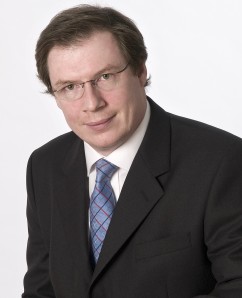
Andrew Crawford Q: When, how and why did you and your firm become involved in the structured credit markets?
A: Managing structured credit products was a natural evolution for Threadneedle. Our fund managers were accustomed to using credit derivatives for relative value assessment and price discovery.As our fixed income desk grew to .......
The Structured Credit Interview 27 June 2007
-
Absolute understanding
Campbell Smyth, a portfolio manager at Absolute Capital, answers SCI's questions
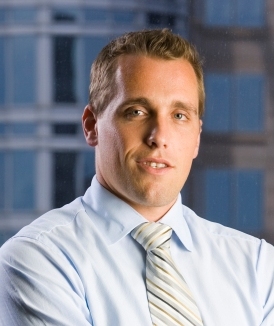
Campbell Smyth Q: When, how and why did you and your firm become involved in the structured credit markets?
The Structured Credit Interview 6 June 2007
A: Absolute Capital has been involved in the structured credit markets since the company's inception in 2001 with the founders and senior staff being involved in the market prior to joining Absolute Capital. Structured credit .......
-
Trading migration
This week, Maple Securities (UK) answers SCI's questions
Q: When, how and why did you become involved in the structured credit markets?
The Structured Credit Interview 2 May 2007
A: Maple has been trading proprietary strategies since our inception in 1986. From proprietary trading we developed a successful structured products business. Credit trading was an opportunity for us to employ intellectual capital acquired from our proprietary trading experience and structured products capabilities. So, when a credit .......
-
Process oriented investors
This week, Markus Kroll, principal at Palomar Capital Advisors, answers SCI's questions
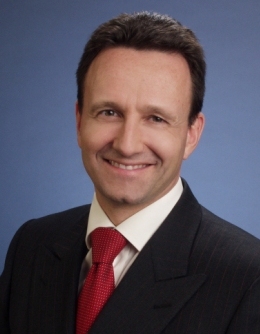
Markus Kroll Q: When, how and why did your firm become involved in the structured credit markets?
The Structured Credit Interview 11 April 2007
A: Palomar Capital Advisors was formed in early 2003 by veterans of the credit and securitisation markets aiming to broker, structure and manage structured credit investment products. By that time, the tremendous success of credit derivatives .......